Medical school guide · 2027 entry
Bristol Medicine
Bristol Medical School, University of Bristol
An integrated MBChB where, once academic minimums are met, interview selection rests entirely on UCAT and offers rest on a six-station online interview.
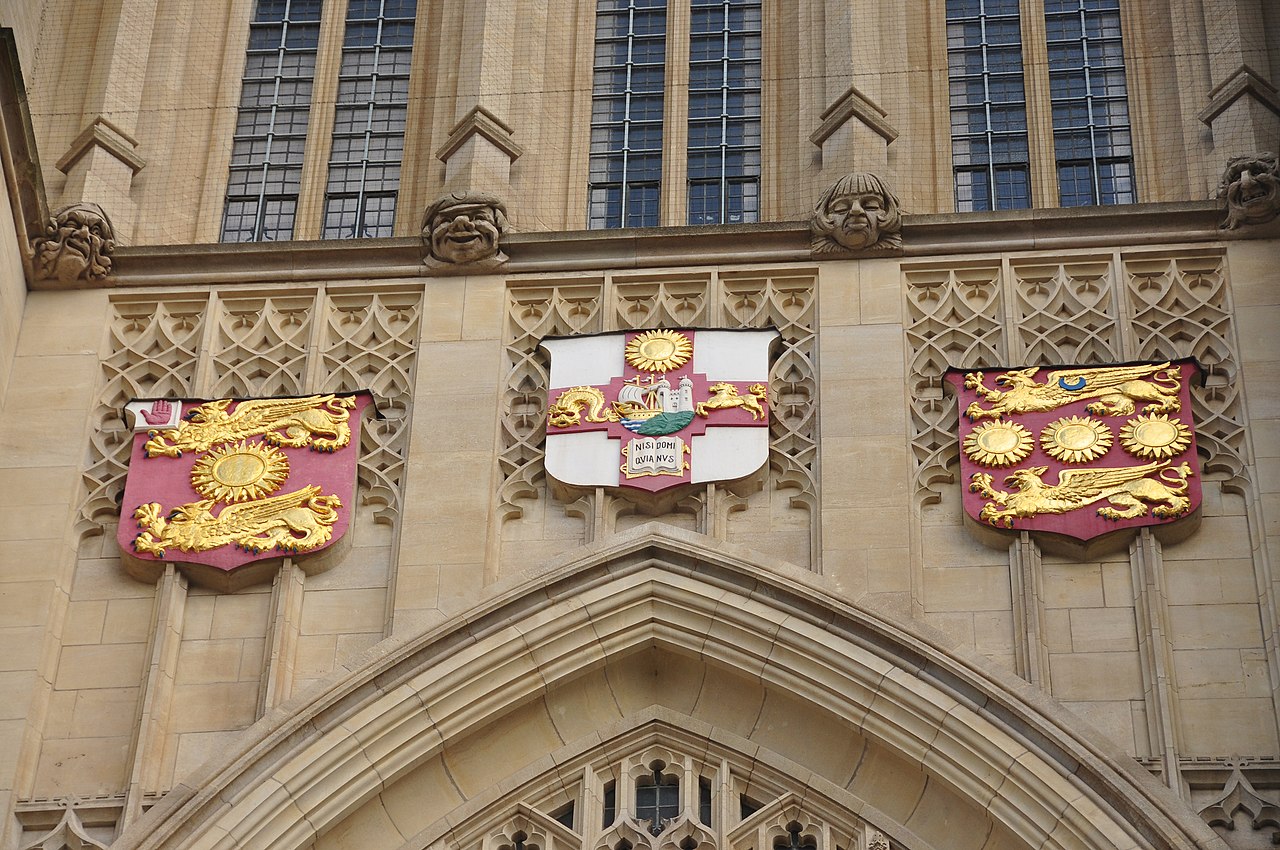
Wills Memorial Building, University of Bristol
- Course
- A100 · 5 yearsMBChB
- Typical offer
- AAA
- Interview
- MMI
- Halls from
- £136/wk
- Local private rent
- £1,893/mo
- Location
- Bristol
Preparing for Bristol
What matters most at Bristol.
- 01
UCAT is weighted 100% for interview selection, so it is the single most important step before December.
- 02
Each of the six stations is scored by three assessors, which rewards consistency rather than one standout answer.
- 03
Previous interview performance is not considered, so reapplicants start afresh.
Notes by Dr S Farooq, MBChB, BSc (Hons). Checked October 2026.
The interview
The Bristol medicine interview.
MMI
Format
Structured online interview with six stations (2026 entry format; the university does not call it an MMI)
Stations and timing
Six stations, about 30 minutes in total. Two panels of three assessors each cover three stations (2026 entry format, the latest published).
In person or online
Online (Zoom was used for 2026 entry).
Dates
For 2027 entry, interviews are expected from December 2026 to February 2027 (applicants must be available from November to April). Most offers wait until all interviews finish, and some applications are held until May. For 2026 entry, outcomes were aimed for within three weeks of interview.
How it counts
Station scores are combined into a final interview score, and the strongest performers receive offers. UCAT is the first tie-breaker, then academic history. Previous interview performance is not considered.
What Bristol assesses
- Skills and attributes for a medical career
- Insight into medicine-related topics
- Honesty and integrity
- Professional conduct
What the tasks involve
- Questions based on GMC guidance for students
- Scenarios based on GMC guidance
- Reflection on work experience
Preparation advice from Bristol
Applicants are advised to read the GMC's 'Achieving good medical practice: guidance for medical students'. The university's interview page sets out technical and environment guidance and rules (no notes, AI or recording).
Six complimentary mock MMIs with reading time, timed answers and marking points, written by a doctor.
Entry and UCAT
Getting an interview at Bristol.
Typical requirements for school leavers. Always check the full requirements on the Bristol website.
Typical A-level offer
AAA
Required subjects
Chemistry plus one of Biology, Physics, Maths or Further Maths (Biology and Human Biology cannot both count). Resits are considered.
How the UCAT is used
For 2027 entry, once academic minimums are met, UCAT is weighted 100% for interview selection. The three cognitive subtests are combined with equal weight and applicants are ranked; there is no fixed cut-off.
Situational judgement (SJT)
Not used in the combined score for selection (2027 entry).
Published UCAT scores
2026 entry (2025 cycle): 2240 home and 2270 overseas (sum of the three cognitive subtests).
GCSEs
Maths grade 7/A and English grade 4/C (6/B in English Language for non-native speakers without IELTS). GCSEs are not weighted beyond meeting these minimums.
Other qualifications
IB 36 points (18 at HL) with HL 6,6 in Chemistry and one of Biology, Physics or Maths; BTEC Applied Science DDD with specified Chemistry units; Access to HE accepted; graduates with a 2:1 plus BBB.
Contextual offers
Contextual offer of ABB including A in Chemistry and B in Biology, Physics, Maths or Further Maths (IB 32 with HL 6 in Chemistry and 5 in a second science). Eligibility is set out on the university's contextual offers page, and the Access to Bristol programme is available.
The course
Studying medicine at Bristol.
At a glance
- Teaching
- Integrated: lectures, case-based learning, practicals
- Anatomy
- Cadaveric prosection
- Intercalation
- Optional, between Years 3 and 4
- Main campus
- Clifton precinct, then South West academies
League tables weight different things, so the same school can sit in different places. Use them as one input, alongside the course, the selection method and where you would like to live.
Year by year
- Year 1Health and wellbeing through case-based learning, with placements in primary and secondary care.
- Year 2Disease processes and differential diagnosis of common symptoms, alongside primary and secondary care placements.
- Year 3Clinical placements in primary, community and secondary care at the clinical academies.
- Year 4Care across the life course, from birth to old age, ending in final knowledge and clinical exams.
- Year 5Elective, then working within clinical teams to prepare for foundation posts.
How it is taught
Integrated curriculum with a mix of lectures, case-based learning and practical work.
Patient contact
Placements in primary and secondary care from Year 1, with early exposure in hospital, community and GP settings.
Intercalation
Optional extra year between Years 3 and 4 for a Bachelor's or Master's degree.
Placements
Clinical academies and teaching GP practices across the South West.
Distinctive features
- Anatomy taught with cadaveric prosections
- Inter-professional placement work with allied health students
- Substantial student-choice programme including audit and research
- Final year designed as preparation for foundation posts, with an elective
How you are assessed
Final knowledge-based and clinical examinations are taken at the end of Year 4, so Year 5 focuses on the elective and preparation for practice.
Elective
Students choose their own elective placement at the start of Year 5.
Main teaching hospitals
- Bristol Royal Infirmary
- Southmead Hospital, Bristol
- Royal United Hospital, Bath
- Gloucestershire Royal and Cheltenham General
- Musgrove Park Hospital, Taunton
- Great Western Hospital, Swindon
Placements and travel
From Year 3 students rotate through most of the clinical academies across the South West, including Bath, Gloucestershire, Somerset, Swindon and Weston-super-Mare. Bath students live on the Trust site and Weston offers free accommodation; English students on the NHS Bursary can claim extra placement travel costs.
Student life
Living in Bristol as a medic.
Where you will live, the societies and sport on offer, and how you will get around. Prices and dates change, so check the linked pages.
The city
Bristol is a large city in the South West, between Gloucestershire and Somerset, about 100 miles from London. The University's main precinct is in the city centre.
Accommodation
First-year undergraduates who firmly accept and apply by the guarantee deadline (30 June in 2026) are offered a University room, though not always their preferred residence. Rooms cost £136.50–£322 a week (2026/27).
Medical society
Students' union
Sport and gyms
Sport, Exercise and Health runs the University's gyms, pool and classes. Student memberships are paid monthly (off-peak from £20.50 a month, 2026) and club members need a £25 SEH Access Pass. Galenicals includes medics' sports teams.
Getting around
Bristol has buses and a city e-scooter and e-bike scheme. Bath and Cardiff are the nearest cities, and the University runs shuttle buses on open days.
Support for medics
Galenicals has a Welfare Officer and a peer-support Welfare Rep Network, and represents medical students to the Faculty. Each clinical academy has its own Academy Dean and student facilities.
Cars and parking
Students in University residences should bring a car only if essential; permits favour Blue Badge holders, health or caring needs and placements reachable only by car, and cost £108 a year at Stoke Bishop halls or £196.90 at Clifton halls (2026/27, no space guaranteed). Clinical academies range from the Bristol Royal Infirmary (walking distance of the precinct) to Bath, Gloucestershire, Swindon, Weston and Somerset, with on-site or free accommodation offered at Bath and North Somerset.
Food and essentials
Bristol SU's city guide points students to the Triangle, at the top of Park Street and next to the main precinct, for groceries, shops and cafés.
Going out
Bristol SU's venues include the Anson Rooms and The Beckford; the Triangle at the top of Park Street has some of the most popular student clubs, and King Street by the harbourside is the main pub street.
Costs and living
Bristol medicine fees and living costs.
Fees, university accommodation and local private rents, from official sources.
University halls
From £136/wk£136.50–£322 per week for undergraduates (2026/27); 38–42 week tenancies. Catered rooms cost about £72 a week extra (£2,731.06 a year) for food
Accommodation pricesLocal rent, whole homes (ONS)
£1,893/mo£1,893 per month, Bristol, ONS Price Index of Private Rents (September 2026 data, released 21 October 2026)
Average for a whole home of any size; a room in a shared house costs much less.
Home tuition fee
£10,050 for the first year (2027 entry)
International tuition fee
£47,600 for the first year (2027 entry); international fees rise each year with expected inflation
Fees sourceBursaries and funding
English students can get the NHS Bursary from Year 5. Gateway to Medicine is a widening participation route; the Access to Bristol and Bristol Scholars bursaries closed to new students from 2025/26.
Other routes in
Graduate, gateway and international routes.
Graduate entry
Bristol does not run a separate graduate-entry course for 2027. Graduates can usually apply to the standard course. See graduate-entry courses
Gateway or foundation
Gateway to Medicine (A108) is a 6-year course with a foundation year and automatic progression to MBChB, for UK widening participation applicants who meet the gateway criteria. The typical offer is BBC including Biology or Chemistry. Applicants predicted AAB or above, or an A in Chemistry, are ineligible. UCAT is required.
International applicants
Accepts international applicants. International places: Bristol does not publish an international quota for A100. Overseas applicants are shortlisted separately, with a UCAT interview threshold of 2270 (2026 entry) (2027 entry).
The course page and the 2027 admissions statement accept international applicants; the number of places is not published there. Bristol also runs an International Foundation Programme for Medicine.
Places
Bristol does not publish a fixed number of A100 places in its admissions statement or course pages.
Applications, interviews and offers
Bristol does not publish application, interview or offer totals for A100.
FAQs
Bristol medicine FAQs.
What are the entry requirements for Bristol medicine?
For 2027 entry, the typical offer is AAA with Chemistry plus one of Biology, Physics, Maths or Further Maths. GCSE Maths at grade 7/A and English at grade 4/C are required.
What UCAT score do you need for Bristol medicine?
For 2027 entry, once academic minimums are met, interview selection is based 100% on UCAT, with no fixed cut-off. For 2026 entry the threshold was 2240 for home and 2270 for overseas applicants.
What is the Bristol MMI like?
Bristol's interview is held online. For 2026 entry it was six stations on Zoom, about 30 minutes in total, with two panels of three assessors each covering three stations.
When are Bristol medicine interviews for 2027 entry?
Interviews are expected from December 2026 to February 2027, and applicants must be available from November to April. Most offers wait until all interviews have finished.
How does Bristol decide medicine offers?
For 2027 entry, interviewees are ranked on interview score and the strongest receive offers. UCAT is the first tie-breaker, then academic history.
Does Bristol have a gateway or foundation year for medicine?
Yes. For 2027 entry, Gateway to Medicine (A108) is a six-year course with a gateway year for UK widening participation applicants, with a typical offer of BBC including Biology or Chemistry.
Sources
Official sources.
Checked in October 2026 for 2027 entry. Requirements and dates change each cycle, so always confirm on the Bristol website before applying.
Official links
Open days: Next university open day: Saturday 31 October 2026. Check dates
Show 12 sources
- bristol.ac.uk/study/undergraduate/2027/medicine/mb-chb-medicine
- bristol.ac.uk/study/media/undergraduate/admissions-statements/2027/medicine.pdf
- bristol.ac.uk/study/undergraduate/2027/medicine/mb-chb-gateway-to-medicine
- bristol.ac.uk/study/undergraduate/after-you-apply/interviews/medicine
- bristol.ac.uk/study/undergraduate/2027/medicine/mb-chb-gateway-to-medicine
- bristol.ac.uk/medical-school/study/undergraduate
- bristol.ac.uk/accommodation/apply/guarantee
- bristol.ac.uk/city/travel-and-maps
- bristol.ac.uk/study/undergraduate/visits/open-days
- bristol.ac.uk/accommodation/about/costs/cost-by-residence
- ons.gov.uk/economy/inflationandpriceindices/datasets/priceindexofprivaterentsukm
- bristol.ac.uk/study/undergraduate/2027/medicine/mb-chb-medicine
Photo: Wills Memorial Building, University of Bristol, Nilfanion, CC BY-SA 4.0, via Wikimedia Commons. Vetta Education is independent and not affiliated with Bristol or any university. No offer, interview or admission outcome is guaranteed.
Personal statement review
Applying to Bristol? Have a doctor read your statement.
Upload your draft and receive structured comments by email: what already works, where reflection is thin, and what to strengthen before you submit. Your words stay yours. We comment and challenge, but never rewrite.
- Structure, reflection and evidence, section by section
- Clear priorities for your next draft
- Word, PDF or pasted text, returned as written comments
Choosing your four
Is Bristol right for you?
In the Applicant Diagnostic, a doctor weighs your chosen universities against your profile and shows how to make the strongest case for each.
Questions
How can we help?
Send your admissions or programme enquiry and we'll reply by email.